Roberts County Dog Registration Information
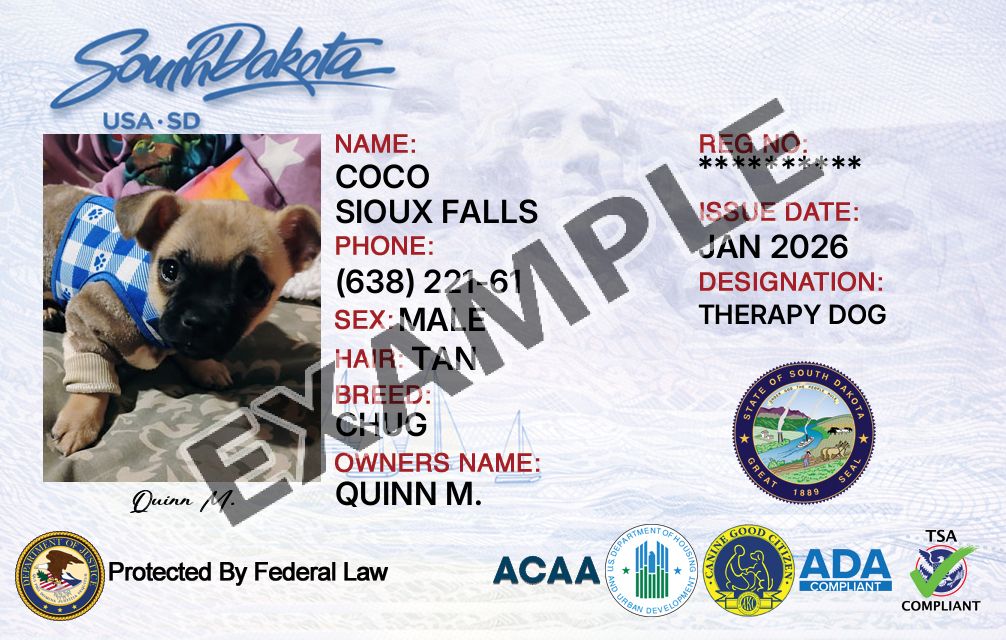
Service Dogs and Emotional Support Animals in Roberts, South Dakota
If you’re searching where do I register my dog in Roberts County, South Dakota for my service dog or emotional support dog, the key thing to know is that “registration” can mean different things. In most cases, what residents actually need is a dog license in Roberts County, South Dakota (when required by a local city ordinance) and proof of a current rabies vaccination. Separate from licensing, service dogs receive their legal status from disability laws (not from a registry), and emotional support animals (ESAs) are typically recognized only for certain housing-related accommodations—again, not by a government “ESA registration” program.
This landing page explains where to register a dog in Roberts County, South Dakota by pointing you to official local offices that can direct you to the correct licensing rules for your exact address (county vs. city limits), and it clarifies how licensing differs from service dog and ESA rules.
Where to Register or License Your Dog in Roberts County, South Dakota
Because requirements can depend on whether you live in a specific municipality or in the county outside city limits, start with the offices below. They are official government contacts within (or serving) Roberts County and can tell you the correct process for an animal control dog license Roberts County, South Dakota question, including what proof you need and where to pay.
Roberts County Treasurer
| Address | 411 2nd Ave E, Suite 2A |
|---|---|
| City/State/ZIP | Sisseton, SD 57262 |
| Phone | (605) 698-7245 |
| Not listed | |
| Office Hours | Not listed |
The County Treasurer’s office is a good first stop when you need the correct local direction for fees, licensing payments, or where licensing is processed for your address. (Some counties route animal-related fees through county finance processes even when enforcement is handled elsewhere.)
Roberts County Sheriff
| Address | 11924 BIA Hwy 700 |
|---|---|
| City/State/ZIP | Sisseton, SD 57262 |
| Phone | (605) 698-7667 |
| Not listed | |
| Office Hours | Not listed |
For rural addresses and enforcement questions (barking dogs, at-large animals, bite reporting guidance, or rabies quarantine direction), the Sheriff’s office can often point you to the correct local process or responding agency.
City of Sisseton (City Hall)
| Address | 406 2nd Ave W |
|---|---|
| City/State/ZIP | Sisseton, SD 57262 |
| Phone | (605) 698-3391 |
| Not listed | |
| Office Hours | Not listed |
If your home is inside Sisseton city limits, city ordinances may require licensing and vaccination compliance at the city level. City Hall is the best starting point for municipal requirements.
South Dakota Department of Health — Roberts County Public Health Nursing (PHN)
| Address | 10 Hickory St E |
|---|---|
| City/State/ZIP | Sisseton, SD 57262-1960 |
| Phone | (605) 910-5552 |
| Not listed | |
| Office Hours | Monday–Friday, 8:00 am–5:00 pm |
Public Health Nursing can be a helpful contact for general rabies/public health guidance (especially after bites or exposures), and they can help residents understand public health steps that may accompany local animal control enforcement.
Overview of Dog Licensing in Roberts County, South Dakota
What “registering your dog” usually means
In everyday terms, “registering” usually means obtaining a local dog license tag or confirming your dog is compliant with local rules. A license helps local authorities identify the owner of a found dog, supports rabies control, and may be required for dogs residing within certain city limits. If you’re trying to find where to register a dog in Roberts County, South Dakota, the first step is determining which local jurisdiction applies to your home address.
County vs. city: why your address matters
Roberts County residents may be subject to different requirements depending on whether they live:
- Inside a municipality (where city ordinances may require licensing, tags, and specific renewal dates), or
- Outside city limits (where enforcement may be handled differently and where requirements may focus on vaccination, at-large rules, nuisance complaints, and bite reporting).
How Dog Licensing Works Locally in Roberts County, South Dakota
Step 1: confirm the correct licensing authority
To get the most accurate answer for a dog license in Roberts County, South Dakota, confirm whether your property is within city limits (for example, Sisseton). If so, city hall typically manages licensing rules and payments (or directs you to the correct city process). If you live outside city limits, start with county offices (Treasurer/Sheriff) for direction on local enforcement and where to complete any required licensing steps.
Step 2: prepare rabies vaccination proof
Even when licensing rules differ by jurisdiction, rabies vaccination status is a consistent requirement in dog control systems. Many local licensing programs require proof of current rabies vaccination to issue or renew a license tag. If you recently moved, adopted a dog, or updated vaccines, ask your veterinarian for a rabies certificate or vaccination record you can provide to the local office.
Step 3: pay fees and obtain a tag (if required)
If your jurisdiction requires licensing, you’ll typically pay a fee and receive a tag or license record. Fees can vary based on factors such as whether a dog is spayed/neutered, the length of the licensing period, and the jurisdiction (city vs. county).
Step 4: keep documentation accessible
Keep copies of your dog’s vaccination records, license details, and identification information. This makes renewals easier and can help if your dog is found, if you need to document compliance for housing, or if there is a bite/exposure investigation.
Service Dog Laws in Roberts County, South Dakota
A service dog is not “licensed” by a registry
A service dog is generally defined by what the dog is trained to do for a person with a disability (performing specific tasks). The dog’s legal status comes from applicable disability laws, not from an online certificate, ID card, or paid registry. In other words: you do not have to buy a “service dog registration” to have a legitimate service dog.
You may still need a local dog license and rabies vaccination
Even if your dog is a service dog, local rules can still require compliance with:
- Rabies vaccination requirements (public health protection)
- Local dog licensing rules (if your city requires a license tag)
- Leash/at-large laws and nuisance rules (unless a narrow exception applies)
So when someone asks where do I register my dog in Roberts County, South Dakota for my service dog, the practical answer is: you generally follow the same local licensing and vaccination steps as any other dog, while the dog’s service status is based on training and disability law—not a county “service dog registry.”
What businesses can (and can’t) ask
In many public-access situations, staff typically may ask limited questions focused on whether the dog is required because of a disability and what work/tasks the dog is trained to perform. They generally should not require documentation, certification papers, or proof of registration as a condition of entry. If you encounter confusion, staying calm and focusing on the dog’s trained tasks (rather than paperwork) often resolves the issue.
Emotional Support Animal Rules in Roberts County, South Dakota
An ESA is not the same as a service dog
An emotional support animal (ESA) provides comfort by its presence, but it is not trained to perform specific tasks in the way a service dog is. That difference matters because ESAs typically do not have the same public-access rights as service dogs.
ESAs and local licensing
If you’re asking where do I register my dog in Roberts County, South Dakota for my emotional support dog, the local licensing answer is usually the same as for any pet dog: follow your city or county licensing requirements and keep rabies vaccination current. ESA status does not replace a required license tag.
ESAs are mainly a housing-related accommodation topic
ESA requests most often arise in rental housing contexts. If you need an accommodation, you may be asked for reliable documentation supporting the disability-related need for the animal. That is separate from government licensing. If a landlord asks for a “registration number,” you can redirect the conversation toward the housing provider’s accommodation process and the documentation they accept—while still maintaining compliance with local pet licensing rules.
Frequently Asked Questions
Register A Dog In Other South Dakota Counties
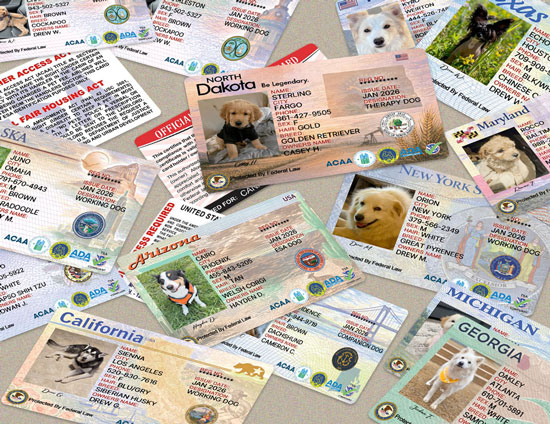
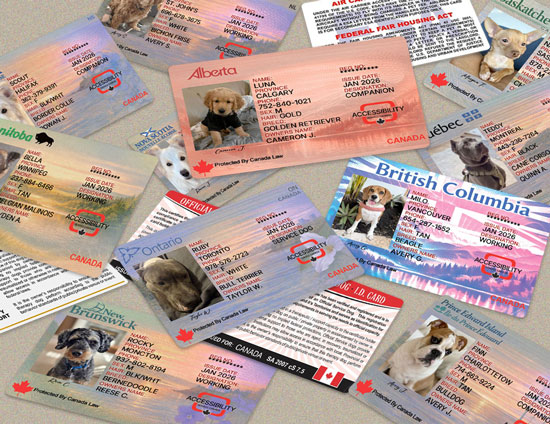
Select your county below to get started with your dog’s ID card. Requirements and license designs may vary by county, so choose your location to see the correct options and complete your pup’s registration.
- Aurora County Dog Registration
- Beadle County Dog Registration
- Bennett County Dog Registration
- Bon Homme County Dog Registration
- Brookings County Dog Registration
- Brown County Dog Registration
- Brule County Dog Registration
- Buffalo County Dog Registration
- Butte County Dog Registration
- Campbell County Dog Registration
- Charles Mix County Dog Registration
- Clark County Dog Registration
- Clay County Dog Registration
- Codington County Dog Registration
- Corson County Dog Registration
- Custer County Dog Registration
- Davison County Dog Registration
- Day County Dog Registration
- Deuel County Dog Registration
- Dewey County Dog Registration
- Douglas County Dog Registration
- Edmunds County Dog Registration
- Fall River County Dog Registration
- Faulk County Dog Registration
- Grant County Dog Registration
- Gregory County Dog Registration
- Haakon County Dog Registration
- Hamlin County Dog Registration
- Hand County Dog Registration
- Hanson County Dog Registration
- Harding County Dog Registration
- Hughes County Dog Registration
- Hutchinson County Dog Registration
- Hyde County Dog Registration
- Jackson County Dog Registration
- Jerauld County Dog Registration
- Jones County Dog Registration
- Kingsbury County Dog Registration
- Lake County Dog Registration
- Lawrence County Dog Registration
- Lincoln County Dog Registration
- Lyman County Dog Registration
- Marshall County Dog Registration
- McCook County Dog Registration
- McPherson County Dog Registration
- Meade County Dog Registration
- Mellette County Dog Registration
- Miner County Dog Registration
- Minnehaha County Dog Registration
- Moody County Dog Registration
- Oglala Lakota County Dog Registration
- Pennington County Dog Registration
- Perkins County Dog Registration
- Potter County Dog Registration
- Sanborn County Dog Registration
- Spink County Dog Registration
- Stanley County Dog Registration
- Sully County Dog Registration
- Todd County Dog Registration
- Tripp County Dog Registration
- Turner County Dog Registration
- Union County Dog Registration
- Walworth County Dog Registration
- Yankton County Dog Registration
- Ziebach County Dog Registration